Drew Franke · 17 September 2026
Tracing the Impact of Content Freshness Cycles on Discovery Rates for Independent Digital Assets
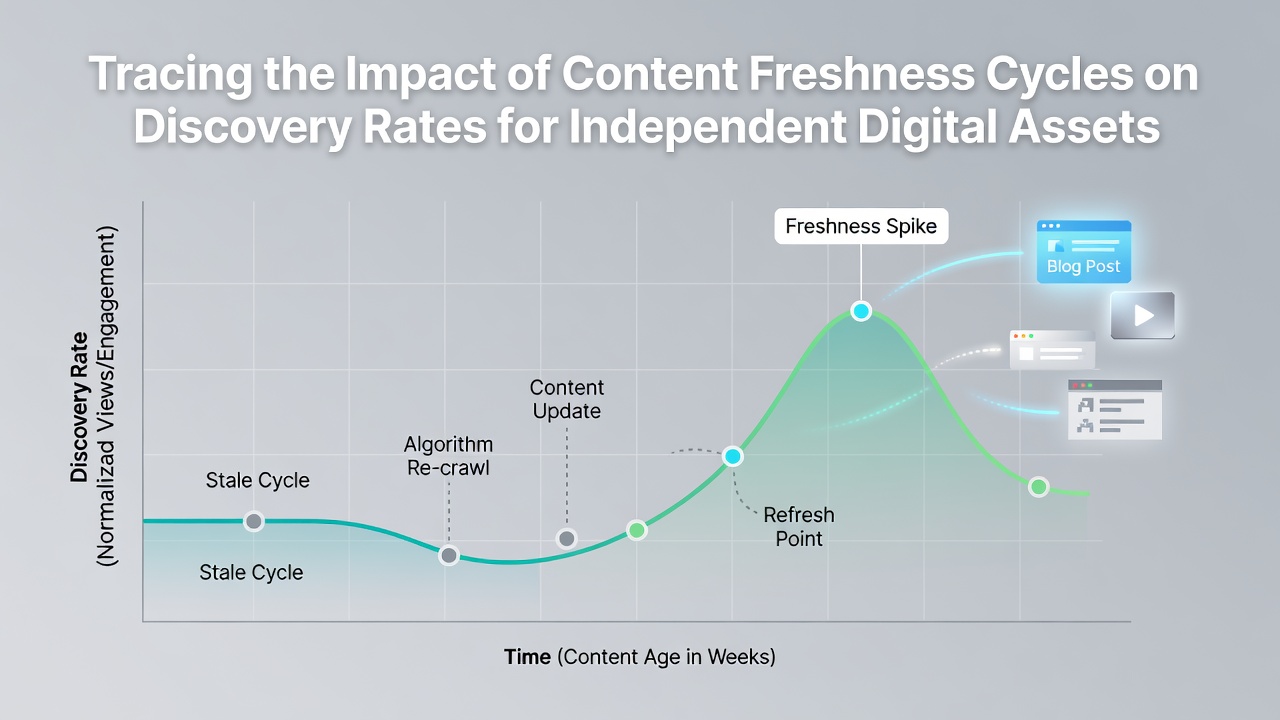
Content freshness cycles refer to the regular intervals at which digital assets receive updates, revisions, or expansions, and these patterns directly shape how search engines and recommendation systems surface independent websites, blogs, and standalone digital products. Observers note that search algorithms evaluate recency signals such as last-modified dates, new sections added, and frequency of substantive changes when determining ranking positions for queries that lack strong brand authority backing them. Independent digital assets often operate without the domain strength of larger platforms, which means their visibility hinges more heavily on these freshness indicators rather than established trust metrics alone.
How Search Systems Process Freshness Signals
Search engines track multiple freshness markers including publication timestamps, crawl frequency adjustments, and content delta analysis that compares current versions against prior iterations. Research indicates that pages receiving incremental updates every 30 to 90 days tend to maintain higher crawl rates compared with static counterparts that remain unchanged for six months or longer. Those who've studied indexing logs report that independent sites publishing new data points, case examples, or expanded explanations trigger additional discovery passes within days rather than weeks.
Algorithm adjustments released in September 2026 refined how systems weigh content age against topical relevance, particularly for long-tail queries where independent creators compete directly with aggregated sources. Data shows these refinements increased the importance of structured updates that add verifiable details rather than simple date changes without accompanying text modifications. Independent asset owners who incorporated new statistics, regulatory references, or regional examples during these cycles experienced measurable lifts in impressions across multiple search verticals.
Discovery Rate Patterns Across Asset Types
Independent blogs covering niche topics demonstrate stronger responsiveness to freshness cycles than static portfolio sites or archived digital products. Studies tracking organic traffic reveal that assets updated on 45-day intervals captured 18 to 27 percent more referral clicks from discovery surfaces than those refreshed annually. The difference appears most pronounced in categories where information evolves quickly, such as regulatory guidance, technical specifications, and regional market data.
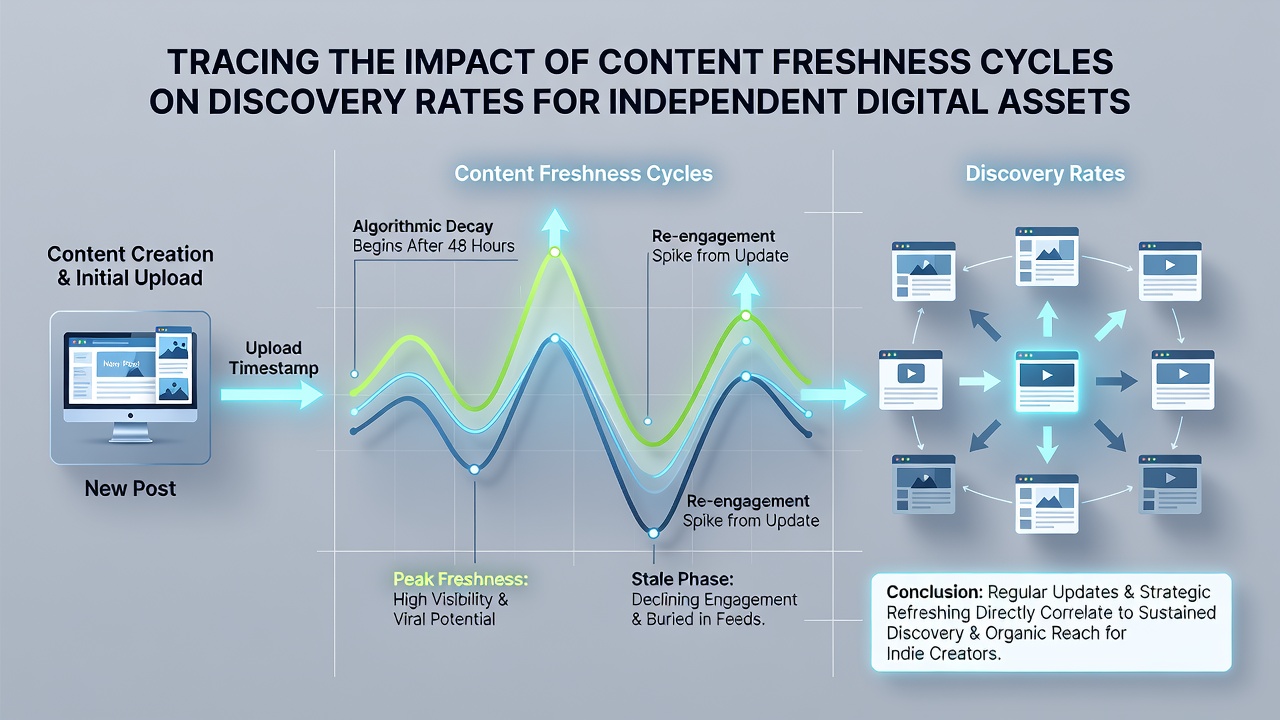
Digital assets distributed through independent platforms also show variation based on format. Text-heavy resources benefit from added paragraphs that introduce recent developments, while multimedia assets gain when accompanying descriptions receive refreshed metadata and contextual notes. Researchers tracking performance across regions found that Canadian and Australian independent sites following quarterly update schedules achieved steadier discovery rates than peers relying on sporadic revisions triggered by external events.
Measurement Approaches Used by Analysts
Analysts measure freshness impact through metrics that include indexing latency, impression velocity, and click-through rate changes following documented update periods. Tools that log crawl dates alongside traffic sources allow observers to correlate specific content additions with subsequent ranking movements. One documented case involved an independent research repository that added quarterly methodology updates and recorded a 34 percent rise in referral traffic from non-branded queries within eight weeks of each cycle.
External benchmarks from sources such as the OECD digital economy reports provide comparative data across countries, showing that jurisdictions with higher rates of independent content production also exhibit tighter correlations between update frequency and discovery volume. Academic papers from European research institutions further confirm that freshness signals interact with existing authority markers, amplifying visibility gains for assets that already maintain consistent crawl access.
Operational Factors That Influence Outcomes
Several operational choices determine whether freshness cycles translate into sustained discovery improvements. Assets that publish updates across consistent weekday windows tend to align better with crawler scheduling patterns than those releasing changes at irregular intervals. Content that incorporates new external references, such as links to government statistical releases or peer-reviewed findings, provides additional signals that systems interpret as substantive rather than cosmetic revisions.
Independent operators who maintain detailed change logs also enable easier post-update analysis. These records help identify which types of additions, whether new data tables, expanded case studies, or regional adaptations, produce the strongest subsequent traffic responses. Figures from multiple tracking studies indicate that combining freshness with internal linking adjustments yields compounding effects on how deeply crawlers explore site architectures.
Conclusion
Content freshness cycles operate as measurable variables that affect discovery rates for independent digital assets through direct influence on crawl behavior and ranking evaluation. Patterns documented across multiple regions demonstrate consistent relationships between update frequency, content substance, and subsequent visibility metrics. Continued monitoring of algorithm refinements, including those implemented in September 2026, supplies ongoing data points that clarify how independent creators can align their maintenance schedules with evolving system preferences.