Drew Franke · 1 October 2026
Examining Backend Data Patterns That Shape Resource Allocation in Standalone Digital Tool Ecosystems
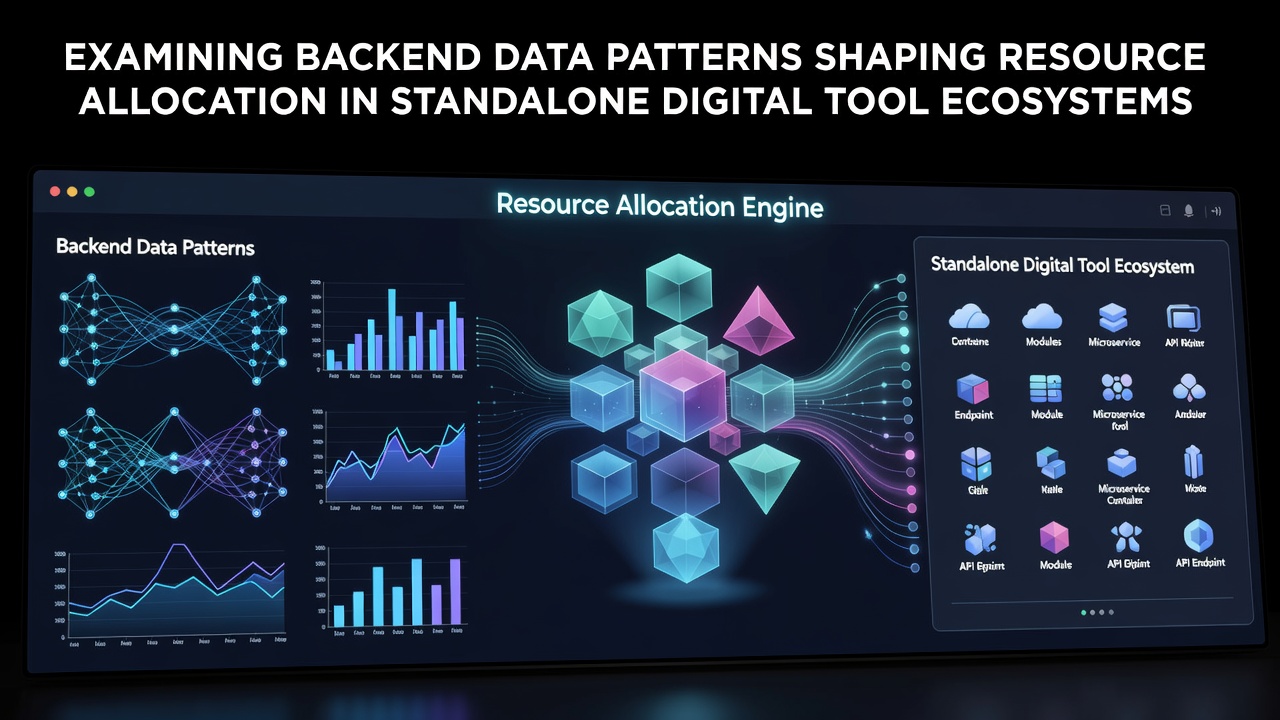
Standalone digital tool ecosystems operate through independent applications that manage their own servers, databases, and processing units without relying on centralized platforms, and backend data patterns form the core mechanism that determines how these systems distribute computing resources. Researchers tracking usage logs, query frequencies, and API response times have documented consistent patterns where peak activity periods trigger automatic scaling of CPU cycles and memory blocks, while quieter intervals lead to deallocation to conserve costs.
Core Data Inputs in Independent Tool Environments
Backend systems collect telemetry from user sessions, error rates, and data throughput volumes, and these inputs feed directly into allocation algorithms that adjust storage capacity and network bandwidth on the fly. Studies from academic institutions show that timestamped event streams, when aggregated over weeks or months, reveal recurring cycles such as daily upload surges in file management tools or weekly report generation spikes in analytics software, allowing operators to pre-provision resources before demand materializes.
One analysis of open-source project management tools demonstrated how session duration data correlates with memory leaks in certain modules, prompting preemptive restarts that free up RAM for active processes. Data from these environments also includes cache hit ratios and database connection pool utilization, which together inform decisions on whether to spin up additional container instances or consolidate workloads onto fewer hosts.
Pattern Recognition Techniques and Allocation Responses
Machine learning models trained on historical backend metrics identify anomalies like sudden traffic bursts from external integrations, and these detections prompt immediate rebalancing of load across available nodes. According to reports issued by the Australian Bureau of Statistics on digital infrastructure trends, organizations using such pattern-based systems reduced idle server time by measurable margins compared with static allocation methods.
What's interesting is how graph-based analysis of data flows exposes dependencies between microservices, enabling targeted resource boosts only where bottlenecks form rather than blanket scaling across the entire stack. In October 2026, updated datasets from Canadian government technology assessments highlighted similar efficiencies in standalone mapping applications where geospatial query patterns dictated dynamic GPU allocation during high-resolution rendering tasks.

Real-World Implementation Examples Across Tool Categories
Take independent design software suites where vector processing logs show concentrated demand during export operations, leading developers to schedule resource pools that activate only during those windows and release capacity afterward. Observers note that similar logic applies in standalone note-taking applications, where search index rebuild patterns drive temporary increases in disk I/O throughput to maintain query speed without constant high provisioning.
European Union digital single market statistics indicate that ecosystems relying on these backend signals achieve tighter alignment between actual consumption and billed resources, particularly in sectors handling variable user-generated content volumes. Patterns extracted from audit trails also help forecast long-term hardware needs, guiding procurement cycles for edge devices deployed in remote installations.
Challenges in Pattern Accuracy and System Adaptation
Noise in raw telemetry data can distort allocation signals, and operators must apply filtering layers before feeding information into decision engines. Research published through the National Institute of Standards and Technology outlines protocols for validating pattern reliability, including cross-referencing multiple data sources to confirm trends before committing additional virtual machines or storage volumes.
Yet external factors such as third-party API changes introduce variability that static models struggle to accommodate, requiring ongoing retraining of the underlying analytics. Those who've examined multi-year logs from productivity tool providers find that seasonal events, like end-of-quarter reporting, create predictable but intense resource draws that benefit from advance pattern modeling.
Conclusion
Backend data patterns continue to serve as the primary driver for resource decisions in standalone digital tool ecosystems, with usage metrics, event streams, and derived models shaping everything from instant scaling to long-range capacity planning. Evidence from government and academic sources demonstrates measurable impacts on efficiency when these patterns receive proper integration into allocation frameworks, while ongoing refinements address accuracy issues arising from noisy or evolving inputs. The landscape remains dynamic as new telemetry types emerge and adaptation techniques evolve in response.